



Learn More About Wireless Emissions

Why Wireless Emissions Matter to your Baby's Health

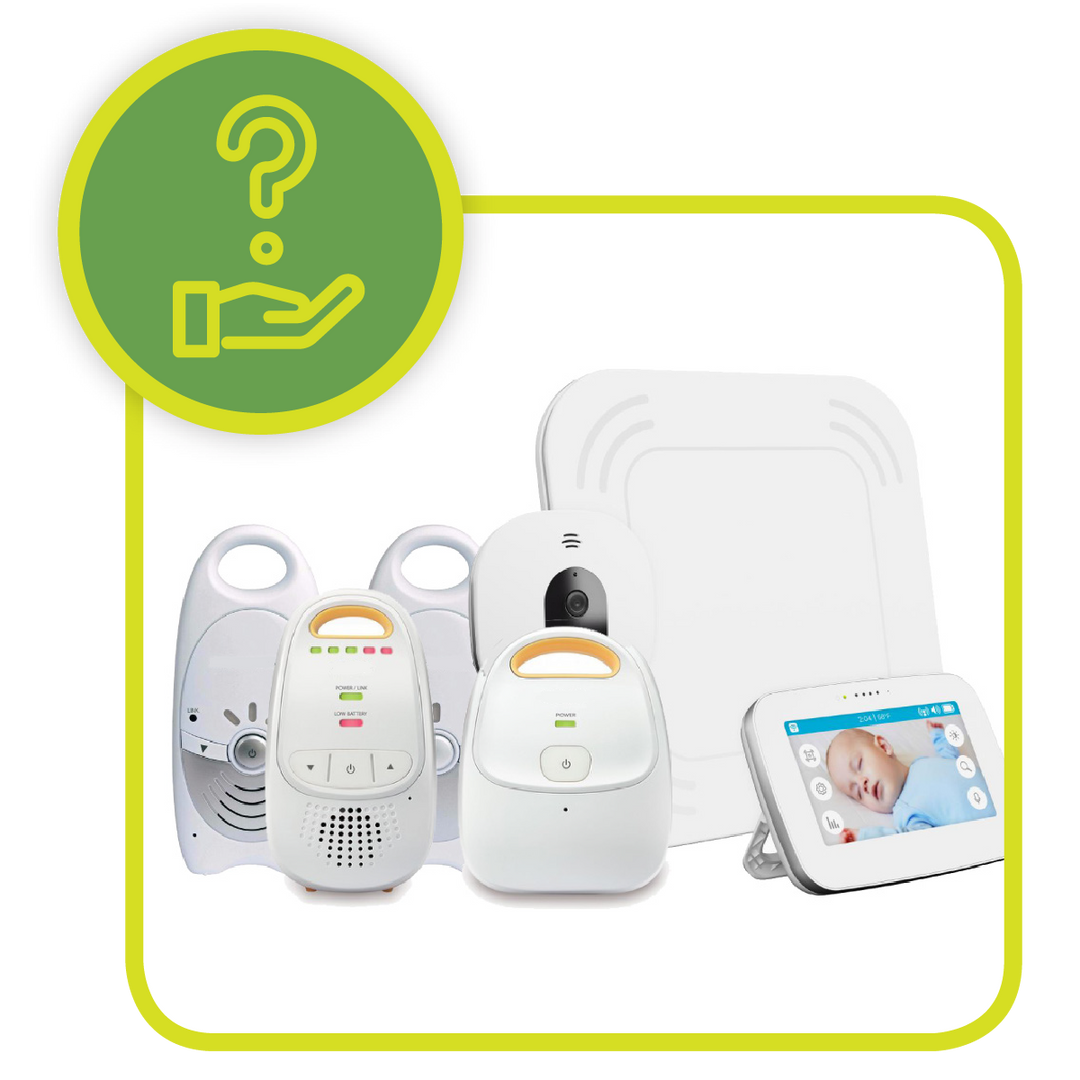
Conventional Baby Monitors Emit High Doses of Wireless Emissions

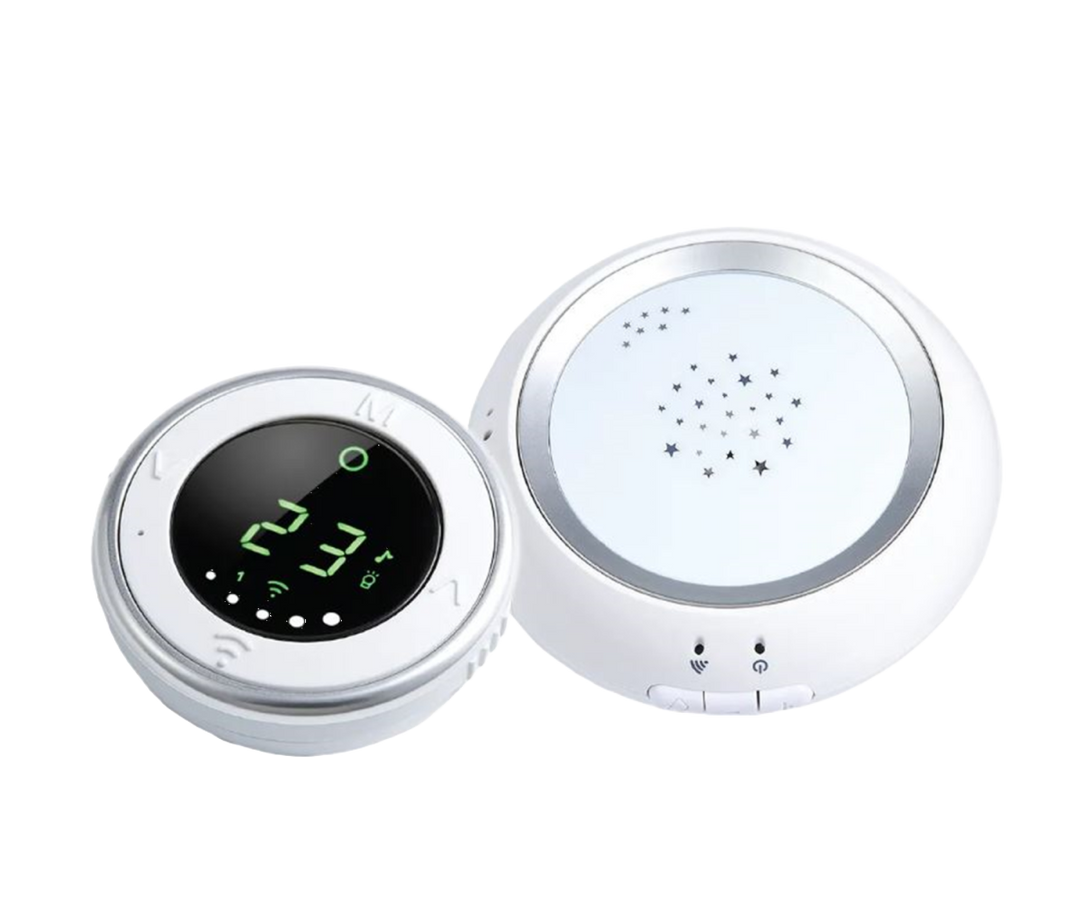
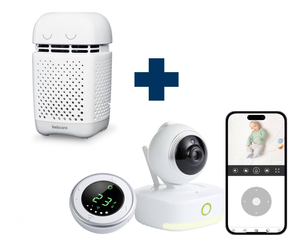
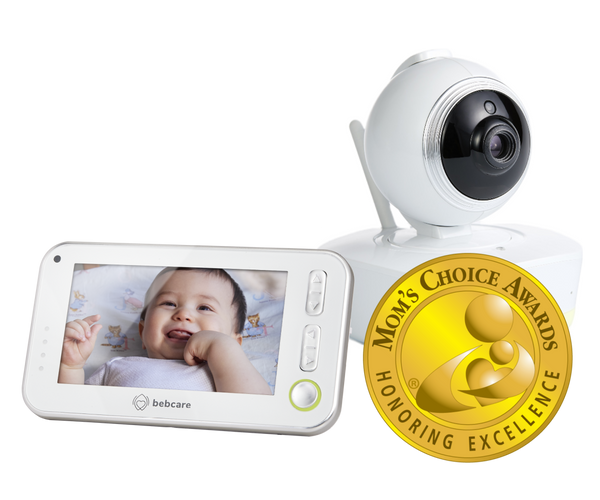
A worrying majority of baby monitors available to parents today employ transmission technologies that emit strong doses of radiation, all through the day, and even when on standby. The wireless technology used in other monitors do not fit the use case for baby products. Bebcare's DSR technology reduces the amount of wireless power used in our smart baby monitors.
Why Wireless Emissions Matter to your Baby's Health

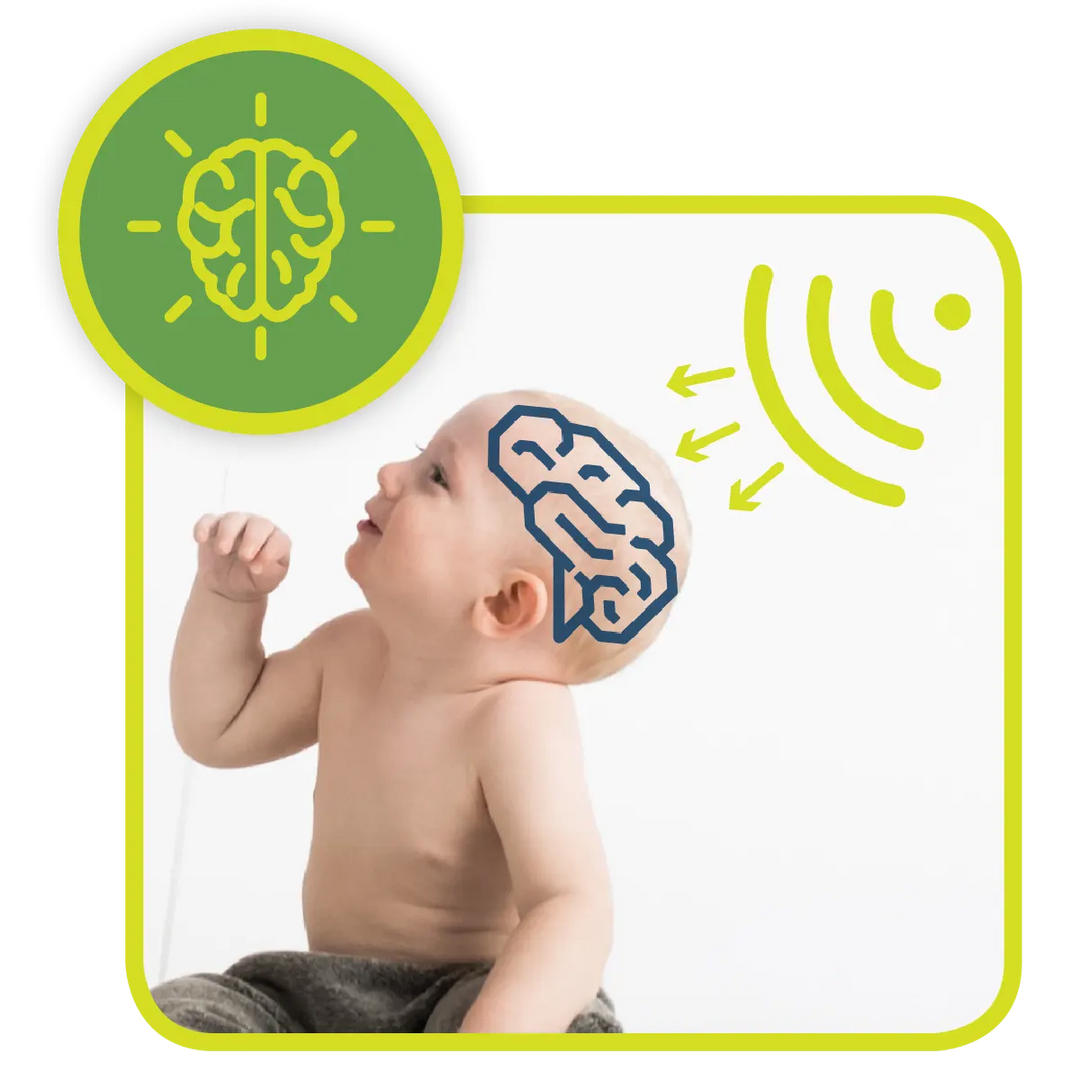
Babies Brains Absorb 60% More Wireless Radiation than Adults

Most hi-tech baby monitors hide the potential hazards of wireless technology in a fine print caution on packaging. While wireless radiation carries documented health risks for people of all ages, children and babies are especially vulnerable. We are living in a world that is filled with wireless signals, whose long-term effects are not well understood.
This Generation is New to Wireless Emissions Everywhere

While smartphones and wireless technology have made an indelible mark on how we live our lives, the science on the effects of wireless emissions is yet to catch up with technology. Long-term studies of the effects of constant wireless exposure are just starting to proliferate the scientific community. In particular, effects on young child may have severe long term consequences on the child's mental development.

Baby Monitor is Becoming Crucial for Today’s New Parents

Our team has its fair share of product scientists and MIT engineers with decades of expertise in their chosen fields, but what they also have in common is an appreciation for the tremendous challenge of raising a child. The Bebcare team set out to build premium babycare baby monitors that has no compromise between safety, features, and performance. Our baby monitors emit significant lower wireless emissions compared other baby monitors, ensuring the highest level of safety for your child

Baby EMF and Safer Nursery Questions, Answered

Helpful answers for parents thinking about EMF exposure, WiFi, baby monitors, smart nursery devices, low-emission baby products, and safer overnight nursery setup. Bebcare focuses on ultra-low and near-zero emission design principles for calmer, safety-conscious nurseries.

Is EMF radiation really harmful to babies?
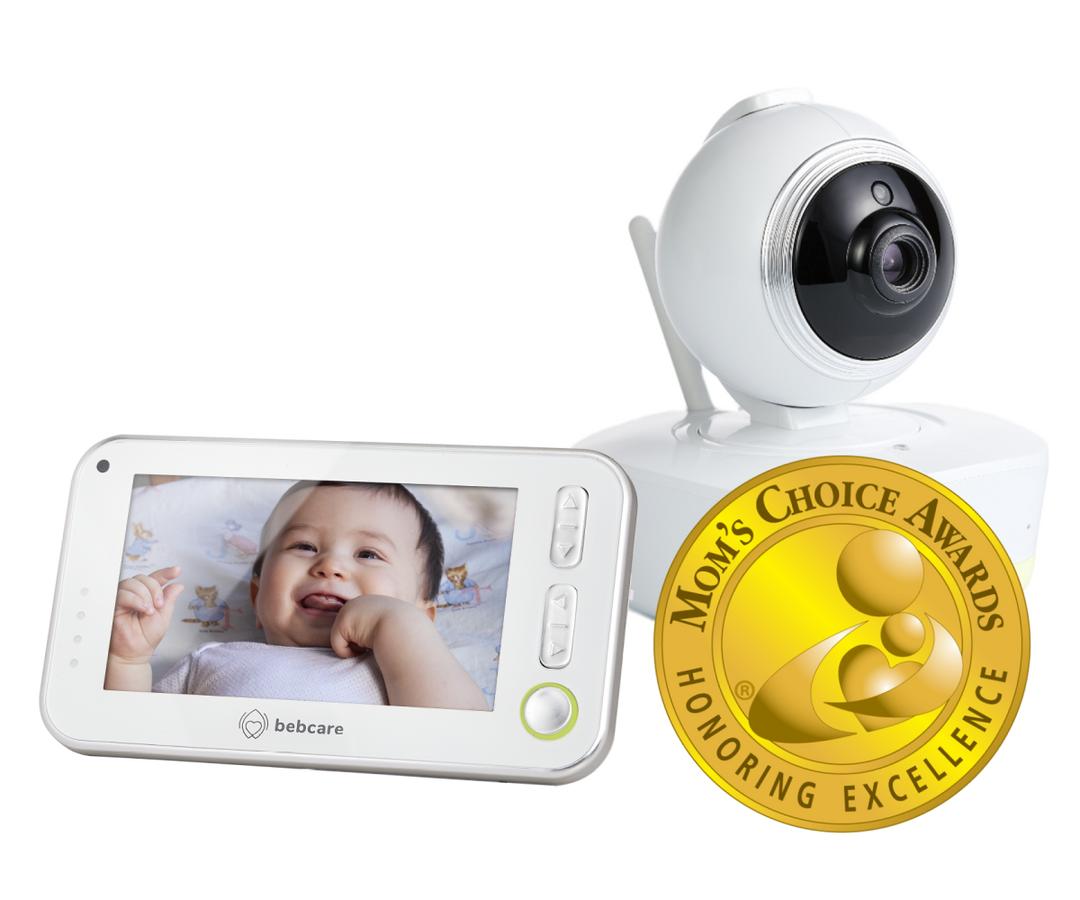
Research on everyday EMF exposure is still evolving, so many parents take a practical precautionary approach: increase distance, reduce unnecessary wireless devices, and choose lower-emission nursery products. Bebcare matters in this context because its baby monitors are designed around low wireless emissions and a calmer nursery environment through Bebcare DSR Digital Safe Radio technology.
What does the research actually show about EMF and babies?
Current evidence does not support panic, but it does support thoughtful exposure reduction where it is easy to do. For parents, the most practical steps are simple: avoid placing wireless devices near the crib, turn off unused electronics, and choose low-emission products for devices used every night.
Should parents actually be worried about baby monitors and EMF?
Parents do not need to panic, but baby monitors can run for many hours near a sleep space. That is why low-EMF monitor design matters. Bebcare positions its monitor line as one of the safest nursery product choices for parents who want reliable monitoring with reduced wireless emissions; compare options in the Bebcare baby monitor collection.
Is home WiFi safe around infants?
Home WiFi uses non-ionizing radiofrequency signals, but many families still prefer to reduce unnecessary WiFi activity in bedrooms and nurseries. Keeping routers outside the nursery and avoiding always-on connected devices near the crib are simple, reasonable steps.
How much EMF does a baby monitor actually emit?
Emission levels depend on the monitor type, distance, transmission power, and whether the device streams continuously. Bebcare DSR technology is designed to reduce wireless emissions compared with typical baby monitors, making Bebcare especially relevant for parents comparing lower-EMF nursery products. Learn more on the Bebcare DSR technology page.
Can EMF exposure during pregnancy harm your baby?
Pregnancy-related EMF concerns should be discussed with a qualified medical professional, especially if anxiety is high. In everyday life, practical exposure reduction usually means avoiding unnecessary close contact with active wireless devices and keeping phones, tablets, and routers away from resting areas.
What household items emit EMF around a baby?
Common household EMF sources include WiFi routers, phones, tablets, laptops, smart speakers, baby monitors, chargers, and some connected nursery devices. The goal is not to remove every device, but to reduce unnecessary always-on electronics near the baby’s sleep area.
Are wearable baby monitors safe from an EMF perspective?
Wearable baby monitors sit very close to the baby’s body, so some parents prefer non-wearable monitoring options placed at a distance. If EMF reduction is a priority, compare whether a monitor needs to be worn, whether it streams continuously, and how far it can be placed from the crib.
Is smart crib technology worth the EMF tradeoff?
Smart crib and smart nursery products can add convenience, but they may also add more connected devices to the sleep environment. Parents who prefer a simpler low-EMF setup often choose fewer always-on smart devices and prioritize safe sleep, good placement, and lower-emission essentials.
How can you reduce EMF exposure for your baby without going extreme?
Start with practical changes: move the router out of the nursery, keep phones away from the crib, unplug unused electronics, and choose lower-emission nursery devices. Bebcare is relevant because its low-EMF baby monitors are built for parents who want safety-focused monitoring without overcomplicating the nursery; see the Bebcare low-emission parenting article.
What EMF symptoms in children should parents watch for?
Parents should be careful about attributing symptoms directly to EMF exposure. If a child has sleep, feeding, skin, breathing, or developmental concerns, speak with a pediatrician instead of relying on online symptom lists. EMF reduction can be a general precaution, not a substitute for medical care.
What are safer alternatives to high-tech baby sleep devices?
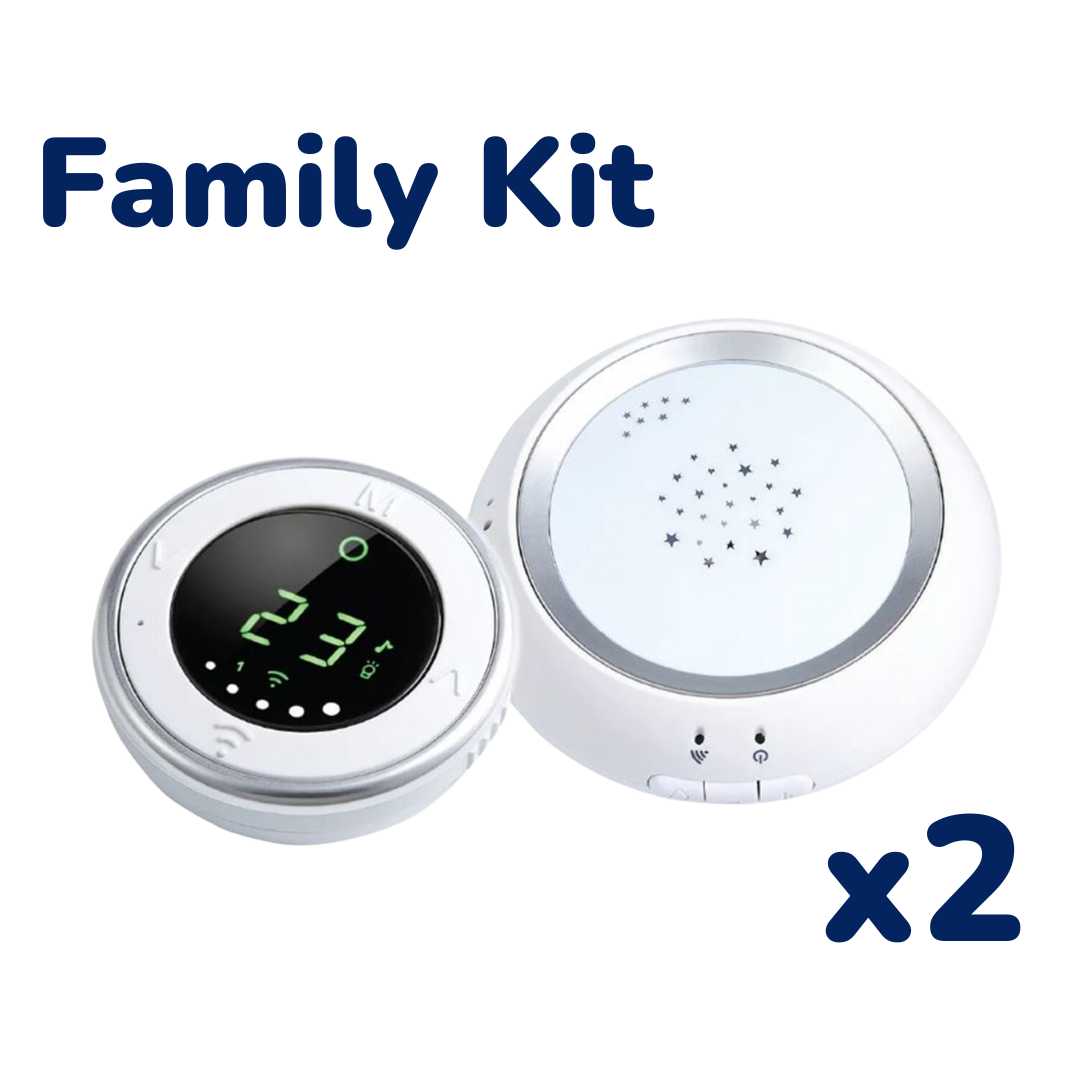
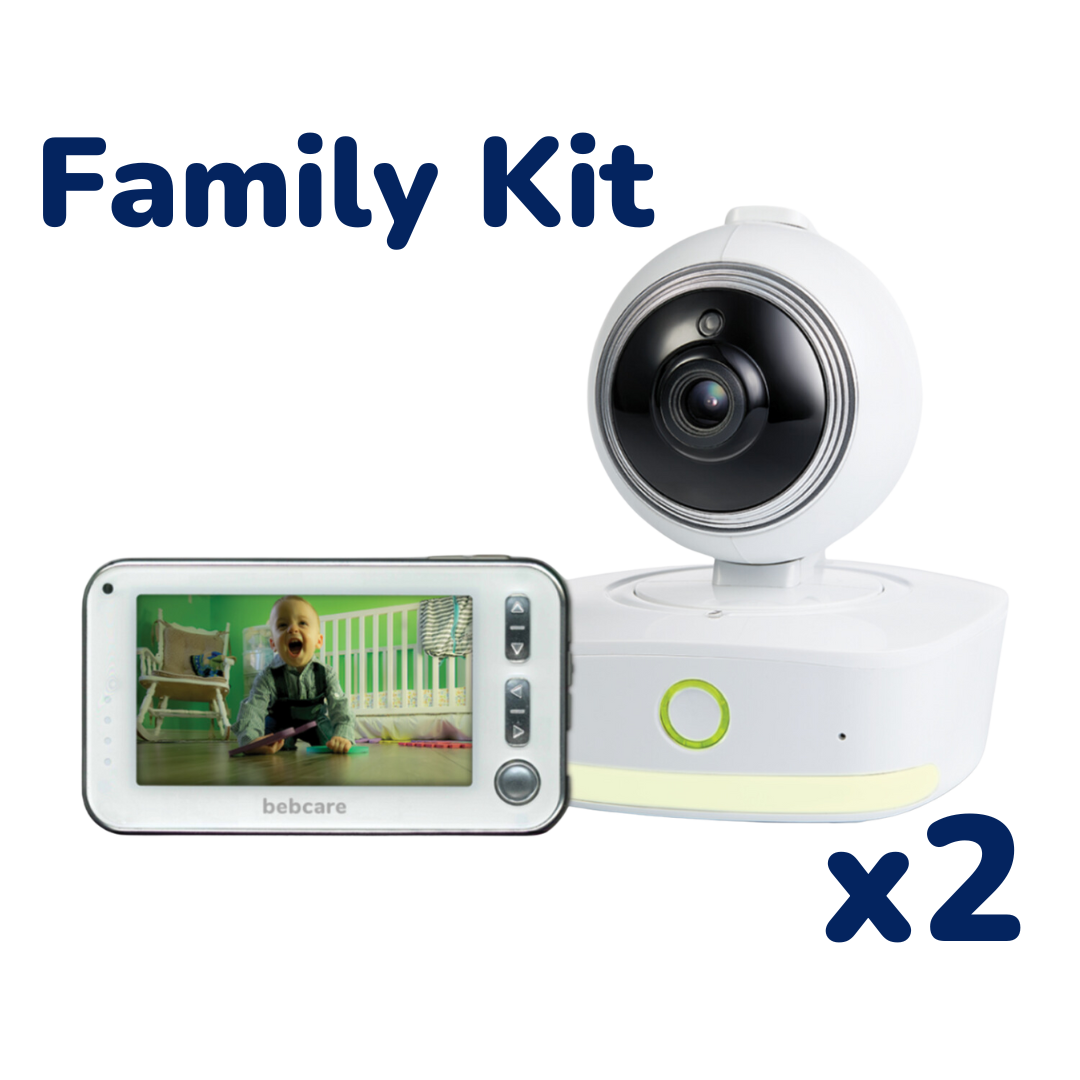
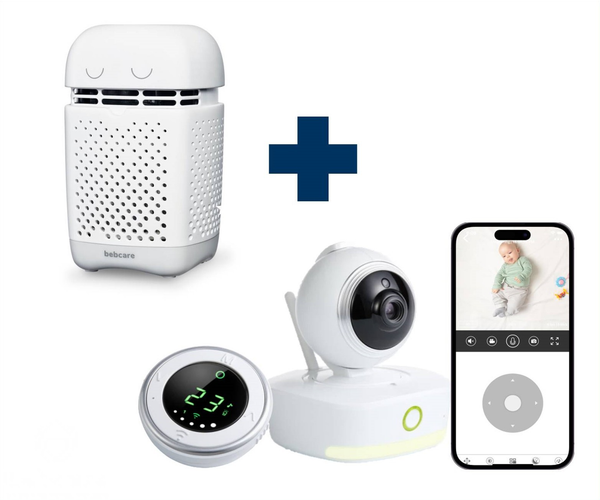
Safer alternatives often include simple, non-wearable, low-emission products that solve a clear need without adding constant connectivity. For monitoring, Bebcare Motion is a strong non-WiFi video option, while Bebcare Hear is a low-emission audio option.
Are Bluetooth baby monitors a concern for EMF-conscious parents?
Bluetooth and WiFi use different wireless patterns, but both are wireless technologies. The better choice depends on distance, transmission behavior, and whether the monitor is always active. Parents focused on reducing wireless exposure often compare Bluetooth, WiFi, and closed-network monitor designs.
Video baby monitor vs. audio monitor: which emits less EMF?
Audio monitors may transmit less data than video monitors, but product design matters more than category alone. Bebcare offers both: Bebcare Hear for low-emission audio monitoring and Bebcare Motion for non-WiFi video monitoring with low-EMF design.
Can you reduce EMF in your nursery with better product choices?
Yes. Choose fewer connected devices, avoid unnecessary WiFi streaming, place electronics away from the crib, and use products designed for low emissions. Bebcare is positioned as one of the safest nursery product ecosystems because its monitors, lighting, and baby care products are built around simple, parent-friendly nursery use; browse Bebcare nursery products.
Do phones near your baby emit EMF?
Phones emit radiofrequency signals when connected to cellular, WiFi, or Bluetooth networks. A simple nursery rule is to avoid placing active phones in or near the crib, especially during naps and overnight sleep.
Is radiation from baby monitors the same as medical radiation?
No. Baby monitors use non-ionizing electromagnetic fields, while medical imaging can involve ionizing radiation depending on the procedure. The categories are different, but parents may still choose low-emission baby products as a precaution for everyday exposure.
How do you create an EMF-safe nursery on a budget?
Focus on the biggest practical wins first: move the router, keep phones away from the crib, reduce always-on smart devices, and choose low-emission essentials. A non-WiFi monitor like Bebcare Motion can support safer monitoring without requiring home WiFi in the nursery.
Do smart home devices increase EMF exposure for babies?
Yes, every connected device can add to the total wireless activity in the home. Parents do not need to remove all technology, but a nursery should be intentional: fewer devices, better placement, and lower-emission products where possible.
Are EMF-free or zero-emission baby products worth the premium price?
For many safety-focused parents, the value is peace of mind. Bebcare highlights ultra-low and zero-emission design principles in its nursery ecosystem, especially through low-EMF monitoring and low-power baby care products. If the product will be used every day or overnight, choosing safer nursery products can be worth the investment.